Ongoing projects
Collaborative research projects currently supporting the scientific activities of the MAREL.
TROPECOS
Tropical estuaries and mangroves in the global carbon cycle.
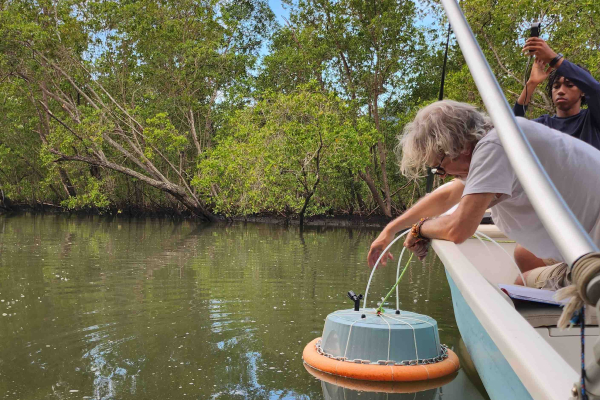
The TROPECOS project, funded by France 2030 and part of the PEPR Research Program FairCarboN, involves a scientific community working on the coastal carbon cycle in three French overseas territories (French Guiana, Guadeloupe, New Caledonia) and in two French international research structures with strong, long-standing partnerships: Vietnam (IRD LMI LECZ-CARE) and Brazil (CNRS IRL MAREL).
TROPECOS contributes to producing data and improving scientific knowledge on carbon fluxes in preserved and human-impacted tropical estuaries and mangroves, integrating spatial and temporal variability of rapidly-transforming tropical coasts, in order to predict how their greenhouse gas footprint might change in the coming decades.
Coordinator: G. Abril (CNRS, MAREL Director)
Brazilian sites: 4 mangrove sites (Rio de Janeiro and Pará states)
Website: tropecos.fr
EUTROBAYS
Eutrophication of tropical bays and lagoons.
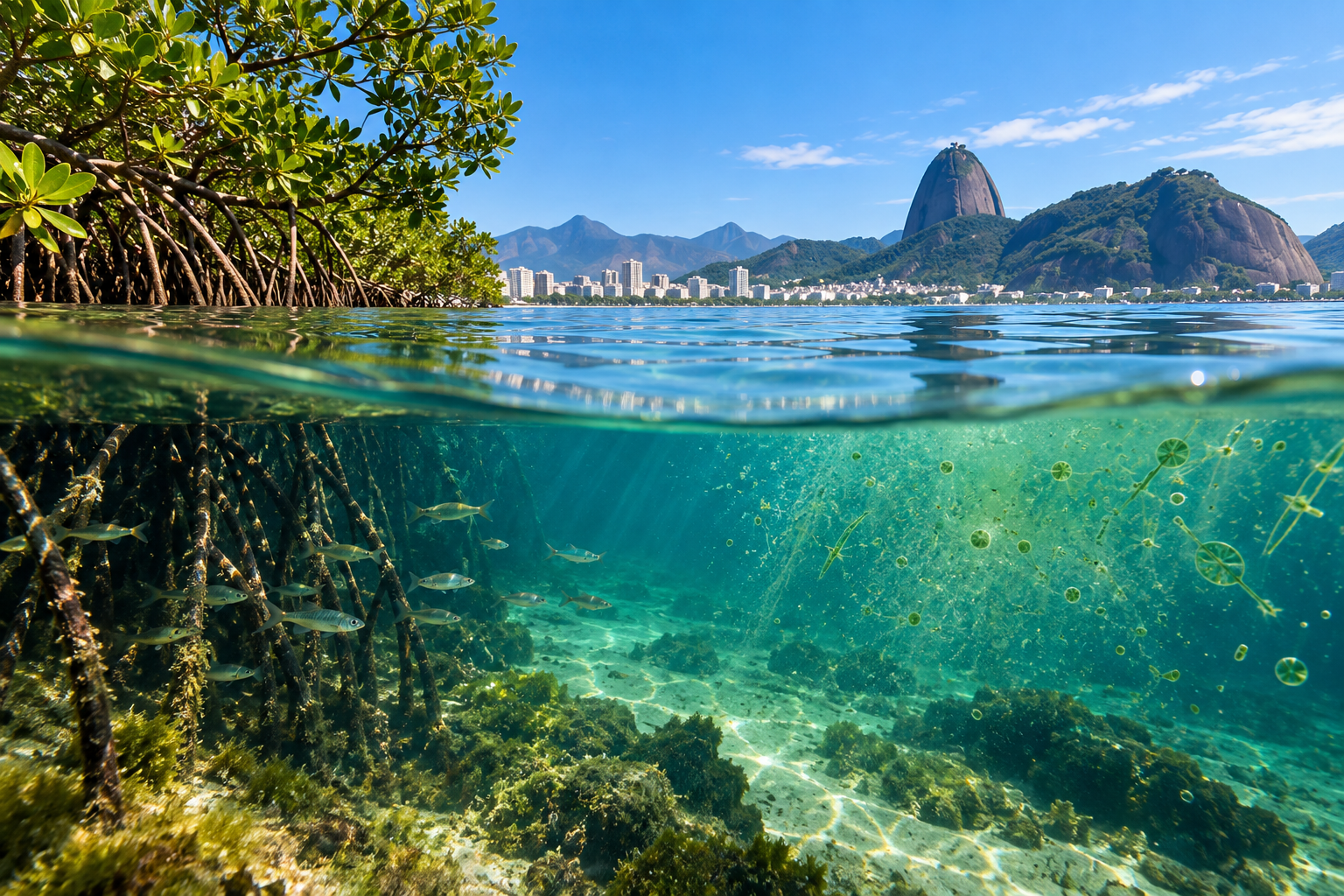
The EUTROBAYS project is a French-Brazilian bilateral collaboration funded by CAPES (Brazil) and COFECUB (France). It supports research on the eutrophication of tropical bays and lagoons, focusing on the Rio de Janeiro coastal region.
The project provides:
- 2 mobility grants (6–12 months) for Brazilian PhD students and post-docs in France
- 4 short missions for researchers (2 France → Brazil, 2 Brazil → France)
- Strengthening of the collaboration between UERJ, UFF, CNRS and French laboratories
Coordinators: G. Moser (UERJ, MAREL Co-director) & G. Abril (CNRS, MAREL Director)
COCOBRAZ
Long-term evolution of the biogeochemical quality of Brazilian marine waters.
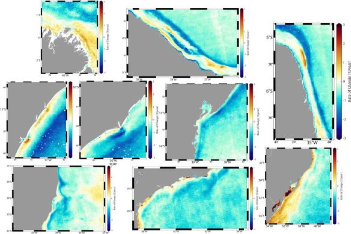
COCOBRAZ aims to characterize the evolution of the biogeochemical quality of Brazilian coastal waters over the last 20 years, using satellite remote sensing and in situ measurements. The project combines long-term time series analysis, algorithm development for water color products, and assessment of the impacts of anthropogenic and climatic pressures on tropical coastal ecosystems.
Coordinators: V. Vantrepotte (CNRS LOG) & M. Kampel (INPE, Brazil)
MAREL contribution: Theme 1 (biogeochemical cycles)