Creation and ambition

In January 2026, the French National Centre for Scientific Research (CNRS), the University of the State of Rio de Janeiro (UERJ) and the Federal Fluminense University (UFF) created a joint International Research Laboratory: the IRL MAREL (MARine Eutrophication Lab).

With one ambition: improve knowledge on all aspects of eutrophication processes in tropical coastal zones.

Eutrophication — the increase of nutrient inputs (nitrogen and phosphorus) into aquatic ecosystems, originating from agricultural, industrial and domestic sources — is a major forcing factor on tropical marine ecosystems. Describing and understanding the ongoing changes in coastal zones allows us to predict their evolution at different spatial and temporal scales, and to prioritize future actions to optimize their effectiveness given the limited resources available.
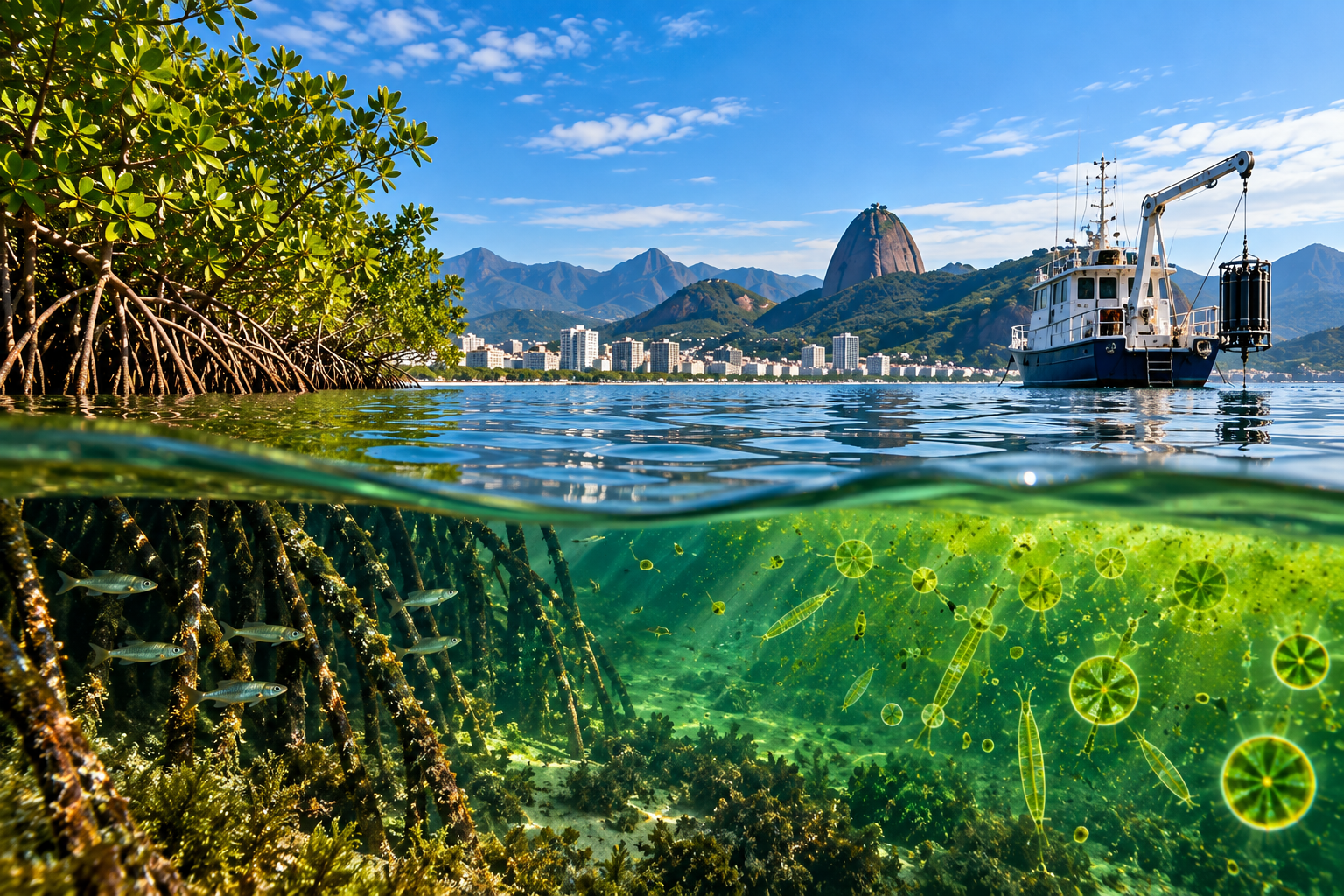
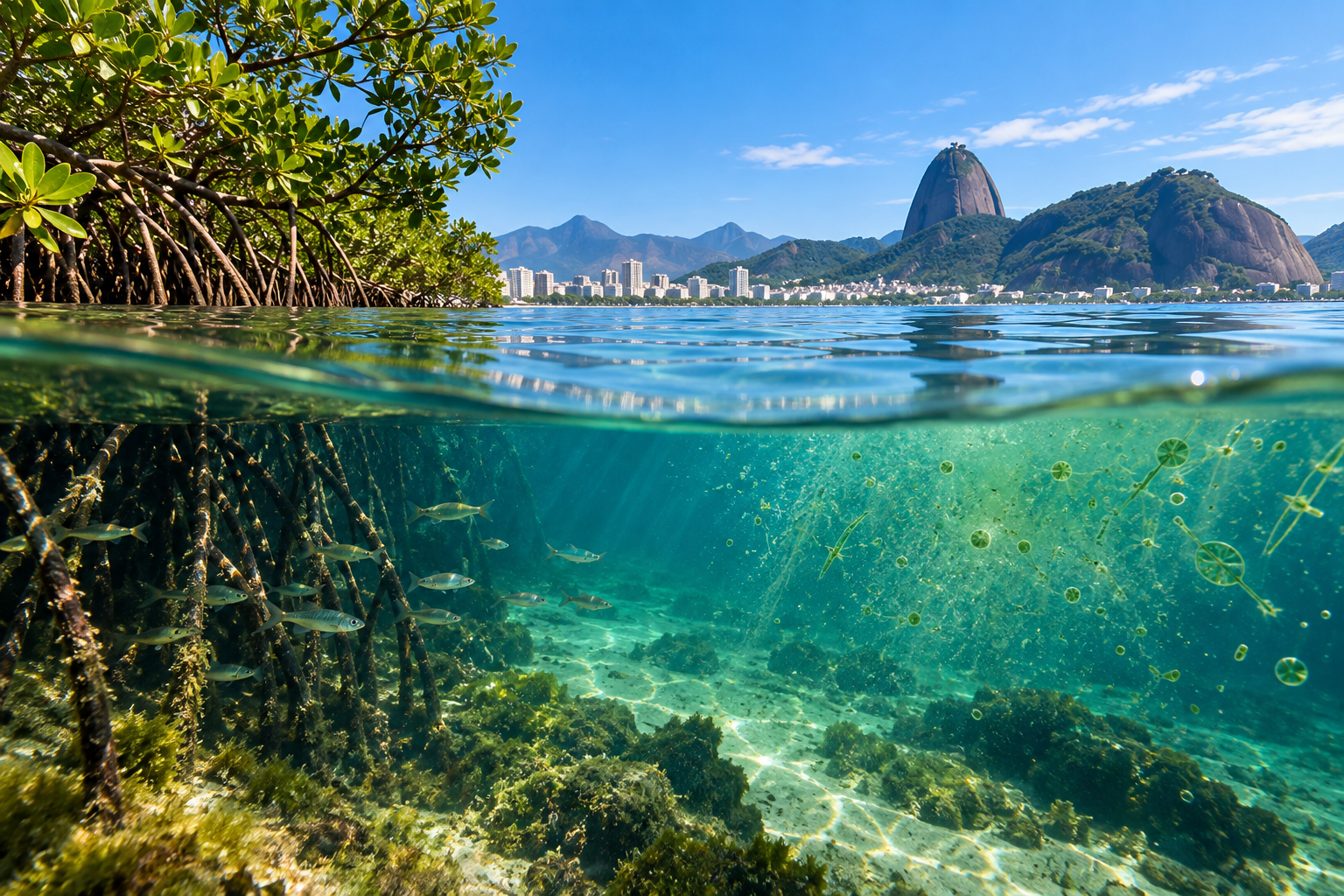
Tropical coastal zone of Rio de Janeiro

Three scientific themes

The MAREL is structured around three transdisciplinary themes addressing the multiple dimensions of marine eutrophication in tropical regions.

Fieldwork and research activities of MAREL

Theme #1 — Biogeochemical cycles (C, N, P) and the propagation of eutrophication

Coastal oceanographic campaigns, satellite water color analysis (spatial and retrospective tools over 20 years), and coupled hydrodynamic / biogeochemical modeling for prediction and decision support.

Theme #2 — Vulnerability of mangroves to eutrophication

Comparison of biogeochemistry and microbiology between urban and preserved mangroves; mesocosm studies and pilot sites; mangroves as a nature-based solution (NBS) for nutrient retention.

Theme #3 — Modifications of biological communities

Phytoplankton dynamics and toxic algal blooms: abiotic factors (nutrients, weather, hydrodynamics) and biotic factors (mixotrophy, parasites, viruses, species synergies); trophic changes and bio-indicator organisms such as filter-feeding bivalves.

Partnership history

More than 15 years of French-Brazilian collaboration in tropical coastal ecology and biogeochemistry.

2008
Beginning of the collaboration

First collaborations between CNRS and the Geochemistry Department of the Federal Fluminense University (UFF).

2014
Guest professor at UFF

G. Abril becomes a guest professor in the Geochemistry Graduate Program at UFF, strengthening long-term co-supervision of students.

2020 — 2025
IRP VELITROP

International Research Project "Vulnerability of tropical coastal ecosystems to eutrophication", funded by CNRS INEE. Over 40 co-signed scientific articles.

2026
Creation of the IRL MAREL

The collaboration is upgraded to an International Research Laboratory, under the joint supervision of CNRS, UERJ and UFF.

Key figures

  • 15+ years of French-Brazilian collaboration
  • 19 PhD students and post-docs co-supervised, 12 of them hosted in French laboratories
  • 9 funded projects (ANR, EC2CO, COFECUB in France; CNPq, FAPERJ, CAPES in Brazil)
  • 40+ scientific articles co-signed with MAREL members
  • Missions of 8 French researchers in Brazil and 7 Brazilian researchers in France

The MAREL also benefits from collaborations with other Brazilian states (Pará, Pernambuco), French overseas territories (French Guiana, Guadeloupe, New Caledonia) and Vietnam.

Infrastructures

The MAREL is hosted at the Faculty of Oceanography (FAOC) of UERJ and at the Geochemistry Department (GEOQ) of UFF.

UERJ

State University of Rio de Janeiro

Offices, phytoplankton laboratory (microscopy, flow cytometry), physical oceanography instrumentation (ADCP, CTD), wet lab, remote sensing and modeling platform, oceanographic vessel Prof. Luiz Carlos, and two marine stations, including the Biological Station of Dois Rios (Ilha Grande).

UFF

Federal Fluminense University

Offices and geochemical analysis laboratories: organic geochemistry (AE, GC, GC-MS); isotopic geochemistry (IRMS CNS); marine biogeochemistry (spectrophotometer, titrators, TOC analyzer).